

“Unable are the Loved to die
For Love is Immortality,
Nay, it is Deity—
Unable they that love—to die
For Love reforms Vitality
Into Divinity.”
~ Emily Dickinson
Remembering Those No Longer With Us

In early 2014, I started my journey as a formerly alienated child who would speak out about alienation. I was invited to several podcasts, talk shows, and events. I remember at the time, everyone was rallying around Jason Patric’s campaign, Stand Up for Gus, hoping that his fight for coparenting would shed more public light on the countless alienated parents who have been denied the right to be in their child’s life.
By December 2014, Facebook groups were filled with posts honoring the one-year death anniversary of Christopher Mackney, a father in Virginia who had taken his life after the pain of alienation being too much.
I was still relatively new to all of this, so I didn’t fully understand the gravity of it all. As a formerly alienated child, parents reach out to me often with questions, hoping that I might provide some insight into what their children are experiencing.
Over the years, I have met many kind and loving parents and grandparents who passed away before they were able to reunite with their alienated children. I have also met formerly alienated children who were only able to spend a few years trying to recapture what was lost before losing their parents to age or illness.
When we are young, it is so easy to overlook just how short our time on this earth is. We want to treasure each moment, but can’t because of the bitterness and anger of the alienator.
Birthdays and holidays are the hardest parts of the year for parents. These are the days when we want to celebrate the love and joy we have for our loved ones, and it doesn’t feel complete without the alienated child.
Without them, the holidays can feel meaningless. Parents often find themselves questioning whether they even have a right to celebrate the day without their child. If you have other kids staying with you, it can be easier to focus on celebrating with them. However, if all your children are taken from you, the house feels empty and lonely.
If you know someone who has lost their life to alienation, let this article be a place where we hold space for them and for the love they carried for their children.
What Alienation Has Taught Me About Suicidal Pain
There was only one instance in my life where I felt suicidal. I was around 9-10 years old at the time, and amidst the family drama, gaslighting from my alienator, and feeling alone, I wanted it all to end. What’s strange to me is how the circumstances around these feelings were far less severe than what would later take place in my teenage years.
Over the course of about six months, I had:
Runaway from home. (I was fortunately found by a caring person in the community who had called the police to take me home).
Watched some of my family be deported back to Singapore.
Been repeatedly punished because my alienator thought I was being disruptive at school, even though I never did the things she claimed she saw me do. Punishments involved a great deal of yelling and being rapped on the knuckles with a wooden spoon.
Been manipulated into a bible study program that I was not interested in, and then I was accused of begging to join it when I wanted to quit.
I felt incredibly alone at the time and hated the life that I was living. I couldn’t escape it, and it felt like no one cared. I wrote a suicide note, and finally, a day came when I was home alone.
I spent a long time thinking. Fortunately, I wasn’t very smart at the time, so I didn’t know of the methods that could cause serious injury. Instead, I told myself that if this was going to be my last moments, then I better enjoy them. I ended up spending that evening eating Oreos, drinking milk, and thinking about the fun things I would want to do before trying to drive a kitchen knife in my chest.
My procrastination paid off because my father came home before I did anything to myself. I took my suicide note and buried it in the trash. I never told anyone about it afterwards.
I haven’t thought about this moment for over 15 years. You could say that this is one of those memories that gets pushed to the far recesses of your mind, hoping it gets forgotten. The idea of saying I had contemplated taking my own life (no matter how unsuccessful the attempt) never sits well with me, and I think that is rooted in the shame of having considered it in the first place. I strive to be a positive influence who always believes that a problem can be solved with the right tools and attitude.
These emotions are common amongst those who have also had suicidal feelings. On one hand, you want to escape the overwhelming pain present in your life. On the other hand, you feel a deep-rooted shame for wanting to end it all.
Suicide is not an easy topic to cover. There is a great deal of trepidation surrounding the subject, to the point that social media influencers have created multiple terms to discuss it so they are not penalized by the algorithm.
I will not be doing that here.
My focus will be on recognition and knowing what to do so that you can support yourself and those you love, just in case the wisdom is ever needed.
Understanding the Emotion of Sadness
Disclaimer: If you or someone you know is in immediate danger of harming themselves, call emergency services now.
I am not a licensed therapist or psychologist. Everything I share in this article is based on lived experience, research, and widely accepted frameworks I’ve studied through books, trainings, and educational resources. This is not a substitute for professional mental-health care. If you are struggling, or if someone you love is in emotional danger, please seek support from licensed clinicians, crisis professionals, or trusted medical providers who are qualified to guide you safely.
Dr. Paul Ekman’s research in body language has shown us that we all express our emotions universally, regardless of age, gender, culture, and education. The most remote tribes in the African savannahs, Amazonian rainforests, and the jungles of Papua New Guinea all use the same facial expressions that you or I would use in a day-to-day setting.
We furrow our eyebrows when we are feeling angry, and we smile ear to ear when we are feeling happy. Our lips curve downward in moments of sadness, and the nose is raised in disgust.
These repeated facial cues were recorded and analyzed, leading to Dr. Ekman’s book, "Emotions Revealed," on microexpressions. While I wouldn’t say this is required reading, I found great value in learning the nuances behind emotions (and that is coming from someone who is primarily a logical thinker).
Additionally, Dr. Paul Ekman and the Dalai Lama collaborated on a resource known as the Atlas of Emotions, which illustrates the experiences and responses associated with the primary emotions—anger, sadness, disgust, fear, and enjoyment. Below is the chart for sadness.
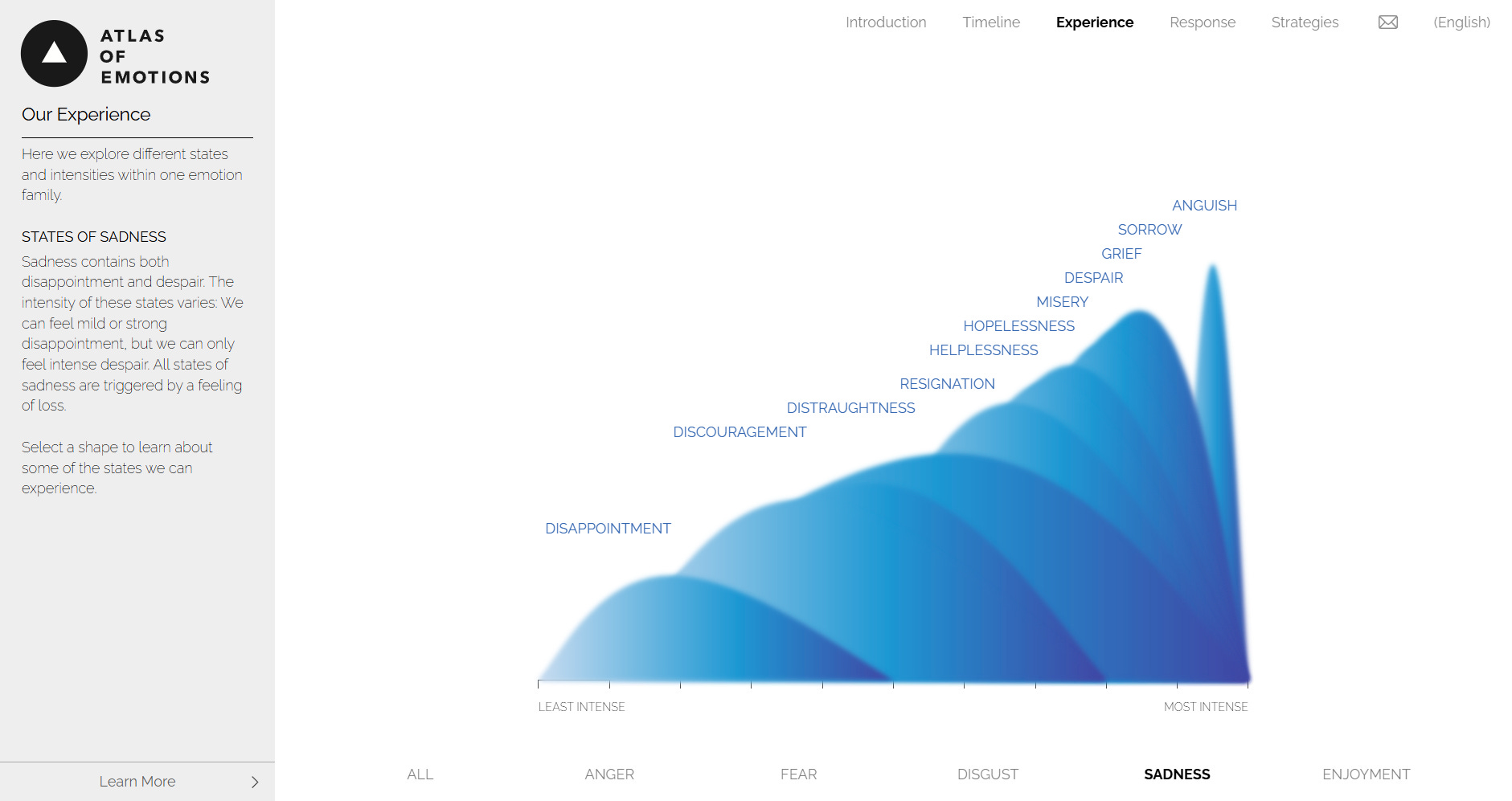
The chart illustrates the 10 levels of sadness, ranging from the least intense to the most intense. As an alienated parent, you can easily see how quickly one can climb up each level. (You will also experience varying intensities of other emotions like Fear, Disgust, and Anger, but I will be focusing on Sadness here).
When your child starts to reject you, you experience disappointment. Thinking it is a phase, you might step back and try again later. After repeated rejections, disappointment turns into discouragement or distraughtness. As you progress to each level, the baseline also increases.
If we use the graphical representation of 1-10 to represent the scale of intensity, disappointment ranges from 0 to 5, while discouragement ranges from 1 to 8. Rising to the next level sets a new emotional floor for the person. If those emotions are not processed, the person will assume this is their new normal, without realizing how tense they are with charged emotions that have nowhere to go.
After experiencing more rejections than can be counted, the alienated parent often falls into a range of emotions, including sadness, resignation, hopelessness, misery, and possibly despair.
What is interesting about many of the higher levels of sadness (from resignation to anguish) is that they all can reach the highest level of intensity. Keep in mind that you can experience multiple forms of sadness simultaneously. For example, you may experience despair and resignation after receiving numerous rejections from your child.
When recognizing sadness through body language, there are several facial cues to look for.
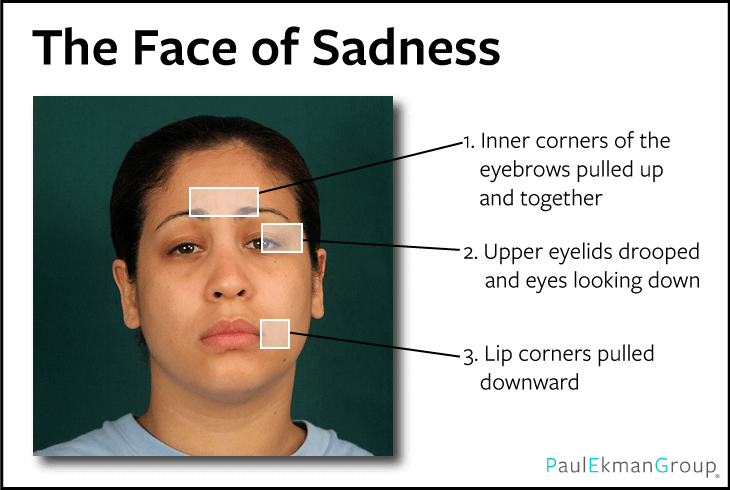
According to Dr. Ekman, genuine sadness is difficult to fake (unless you are a trained actor). Sad emotions are characterized by very specific and involuntary facial changes:
The inner corners of the eyebrows pull upward, creating a slight triangular shape above the nose. This is one of the most reliable indicators of true sadness and is extremely difficult to control intentionally.
The eyelids droop, and the eyes lose their usual brightness or focus.
The corners of the lips pull downward, or the mouth becomes tense as the person tries to hold back tears.
The head often tilts down, paired with gaze aversion.
Muscle tone decreases, causing the shoulders to slump or the body to fold inward.
Breathing becomes shallow or inconsistent, especially when someone is trying to keep themselves composed.
These microexpressions typically flash across the face in under a second. They appear before the person has time to intellectually process what they’re feeling, making them a powerful indicator that the sadness has reached a deeper level than the person may be able to verbalize.
These moments can shift from mild sadness to deep anguish in just seconds, yet the person may offer a polite smile, a quick nod, or a practiced response that dismisses the moment. The body, however, does not lie. Emotional pain leaks through in flashes, be it through a quiver of the lip, a tightening of the jaw, or a rapid blink to push back tears.
The purpose of sadness is to attract attention so that others will come to help you. We are social beings, so when we hear our fellow human crying, we instinctively feel compelled to investigate and offer help.
With that said, we are also prone to deceiving others into thinking that the emotions we are experiencing are not as bad as they look. That is one of the big reasons why suicide catches people by surprise. So many people find themselves saying the same thing, “I thought they were happy…I had no idea they felt that way.”
The body does not lie, and with enough practice, you will become aware of emotional cues that slip out in a fraction of a second before the brain takes back control, resetting the face to another emotional expression and uttering words of comfort to ameliorate the situation.
So, How Do You Know if Someone is Feeling Suicidal?
Disclaimer: If you or someone you know is in immediate danger of harming themselves, call emergency services now.
Keep in mind that in isolation, some of these behaviors are just emotional expressions and coping behaviors. However, if you see multiple signs then you have reason to suspect a person is in a depressive state.
The truth is that most people do not announce these thoughts directly. Some do, but many hide their distress out of shame, fear of judgment, or the belief that their pain is a burden to others. This is especially true for alienated parents, who have often spent years masking their emotions in courtrooms, mediation sessions, or family gatherings where their reality is minimized or dismissed.
That is why understanding the warning signs is crucial, particularly during the holidays, when emotional pressure is at its highest and isolation is more common.
Emotional and Verbal Warning Signs
These are often the first indicators that someone’s internal world is becoming unsafe:
Talking about wanting to die or expressing a wish to “just not wake up.”
Expressing guilt, shame, or self-blame, believing they’ve failed as a parent or that their child’s rejection means they are unworthy.
Saying they feel like a burden, a common belief among alienated parents who feel they bring “too much pain” into conversations.
Talking about feeling trapped or unable to escape their situation.
Expressing hopelessness, especially comments like “It will never get better” or “There’s no point anymore.”
Behavioral Warning Signs
Changes in behavior are often more reliable than words, especially for people who tend to keep their pain private:
Withdrawing from social contact, declining invitations, or disappearing from regular routines.
Sleeping significantly more or significantly less, especially when paired with low energy or irritability.
Increasing alcohol or drug use to numb emotional pain.
Giving away personal belongings or making unusual preparations, such as organizing finances or writing letters.
Taking dangerous risks, such as reckless driving or unsafe behaviors that signal a disregard for personal safety.
Extreme mood swings, ranging from deep sadness to sudden calm (more on sudden calm below), can indicate a final emotional shift before an attempt.
Cognitive and Internal Warning Signs
What a person thinks about can also reveal escalating danger:
Fixating on death, dying, or violent scenarios.
Believing there is no path forward or that all possible solutions have failed.
Feeling emotionally numb, disconnected, or detached from life.
Fantasizing about escape, even vaguely, such as “I just want all of this to stop.”
Situational Warning Signs
Outside pressures can intensify suicidal risk:
Chronic illness, sleep deprivation, or physical pain.
Sudden life changes—loss of work, legal setbacks, relationship ruptures.
Reactivating events, such as the anniversary of estrangement, a missed birthday, or holiday traditions that now highlight absence.
Being alone during meaningful holidays, especially when combined with unresolved grief.
Youth-Specific Warning Signs
Statements of hopelessness about the future.
Overwhelming emotional pain, even when the trigger seems small.
Physical symptoms like headaches, fatigue, stomachaches tied to emotional overload.
Withdrawing from friends or activities, sudden irritability, or unusual anger.
Changes in sleep, appetite, or school performance.
A sudden shift toward risky behavior or impulsivity.
The Sudden Calm
One of the most misunderstood and potentially dangerous warning signs is what psychologists sometimes refer to as the sudden calm. After weeks, months, or even years of emotional turmoil, a person may abruptly appear peaceful, clear-minded, or even cheerful. To friends and family, it can look like a breakthrough. In reality, this shift often reflects a deeper, more concerning emotional state.
When someone has been wrestling with despair or suicidal thoughts, there comes a moment when they may feel they’ve “made a decision.” The conflict between wanting to live and wanting the pain to end temporarily goes away, not because the situation improved, but because they believe they have found a way to escape the emotional burden. The relief they feel is real, but it is relief rooted in resignation.
The bottom line is that the sudden calm creates the impression of recovery while concealing the internal commitment to self-harm.
If you notice someone who has been deeply distressed suddenly becoming unusually calm, organized, or at peace, especially after significant emotional pain, it is pivotal to check in gently and directly. Ask how they’re doing beneath the surface. Stay present and encourage them to connect with you. The goal is not confrontation, but rather to help them feel seen and not alone in a moment when isolation is most dangerous.
Remember, the sudden calm is not a reason to panic, but it is a reason to pay attention and be present.
Where to turn for help
Different countries have different hotlines to call in the event you are experiencing suicidal feelings. I have compiled a list of the most common countries below. If there is one that I have missed, please feel free to tag me in a comment, and I will add it to the list.
United States
988 — Suicide & Crisis Lifeline (call or text)
Text HOME to 741741 — Crisis Text Line
Canada
9-8-8 — Suicide Crisis Helpline (call or text)
United Kingdom & Ireland
116 123 — Samaritans (free, 24/7)
Australia
13 11 14 — Lifeline Australia
1300 659 467 — Suicide Call Back Service
New Zealand
1737 — “Need to Talk?” (call or text)
0508 828 865 — Suicide Crisis Helpline
Germany
0800 111 0 111
0800 111 0 222
TelefonSeelsorge (national crisis hotline, 24/7, free)
France
3114 — National Suicide Prevention Hotline (24/7)
Singapore
1-767 — Samaritans of Singapore (SOS)
+65 6970 6222 — SOS CareText (text line)
Japan
03-5774-0992 — TELL Lifeline (English-friendly)
0120-279-338 — Inochi no Denwa (Japanese-language hotline)
India
9152987821 — Aasra (24/7)
South Korea
1393 — Korea Suicide Prevention Hotline
Philippines
0966 351 4518 — NCMH Crisis Hotline (mobile)
1553 — NCMH Landline Crisis Hotline (nationwide)
South Africa
0800 567 567 — Suicide Crisis Line
0800 456 789 — LifeLine
Hong Kong
+852 2896 0000 — Suicide Prevention Services
+852 2382 0000 — Samaritans Hong Kong
If you’re outside these regions
Find your nearest crisis line through the international directory:
Befrienders Worldwide — https://befrienders.org
Your Alienated Children Need You, Even if They Don’t Know It
One of the core messages I share with parents is that the behavior of alienated children is reactive. They are reacting to the abusive nature of the alienator, which puts them in a survival state.
I explore this topic in depth in my article, "Seeing through the Eyes of the Alienated Child."
Your child may not be in a position to express it, and in some cases, they may not even be aware of it, but they need you. Your child needs you the most at the exact moment they feel least able to reach for you.
Most alienated parents are not negligent, absent, or disinterested. The opposite is true.
They are parents who took an interest in their child’s inner world, invested in their growth, celebrated milestones, and rearranged their lives to accommodate their child's and family's needs. They are parents who would have continued doing all of this had alienation not torn the normal developmental path apart.
Instead of participating in daily development, the alienated parent is forced into the role of an observer, where they must watch from the sidelines as their child changes in ways that are painful to see, and that is its own kind of grief.
You have to watch your child become someone they were never meant to be. The child learns to be scared, reactive, withdrawn, and angry in ways that you never wanted for them. This transformation is not their fault, but it is agonizing to watch, because every step away from their true self is a reminder of the version of them you were trying to nurture.
You grieve the child your son or daughter could have been if they had been allowed to grow without interference, manipulation, or emotional weaponization. You grieve the potential you saw in them (curiosity, humor, courage, brilliance, tenderness), and you mourn the fact that you were denied the chance to help those qualities blossom.
But their story does not end here, and your role in your child’s life is not finished.
Once a child exits the alienating environment—through age, distance, maturity, or a sudden break in the family system—they often require a substantial amount of support to rebuild their identity, trust their own perceptions, and heal from the emotional conditioning they endured.
And that means the parent they return to must be intact.
If you tell yourself they will never see the truth, they will never come back, or that the alienator has won permanently, you surrender your power to change the future. Hopelessness becomes a self-fulfilling prophecy.
I don’t know when your alienated child will return to you, but I do know that suicide guarantees they won’t. It is improbable that they will find out the truth and mourn you because anybody can say anything about the dead—the dead cannot talk back and defend themselves or tell their side of the story.
Do not allow the alienator to hold that kind of power over your child.
How to Celebrate Your Child During the Holidays.
“Perhaps all the dragons in our lives are princesses waiting to see us act, just once, with beauty and courage.”
~ Rainer Maria Rilke

These practices are not about pretending everything is okay. They are about creating continuity, preserving connection, and honoring the place your child holds in your life, even when you are distant.
1. Create a Yearly Memento
A physical object preserves the thread of your bond and creates a tangible symbol of your love that your child can receive one day. For example, you can make a holiday ornament with their name, age, or a memory.
Each year, you put it up on the Christmas tree or somewhere around the house to show they are there with you in spirit.
2. Record Messages for Their Future Self
Your child may not be able to hear from you now, but they may one day want to know who you were and how you held them in your heart.
Record a short video or voice note each holiday season. You can discuss your life, share your memories of them, and express your hopes for their future. Make them fun and light so that they feel included with you in the moment.
Save the files on a hard drive or secure cloud folder so that you can access them when the time is right. If you are concerned about your well-being due to age, be sure to include access to these files in an estate plan.
3. Set Aside a Meaningful Gift Each Year
Sometimes, the alienator will throw away gifts and keep any money that you give your child. At the same time, you might be accused of being indifferent if you do not send gifts.
Consider two types of gifts. One is lower cost (but still meaningful) and forwarded to the alienator’s house (assuming they have primary custody of the child). The other type of gift is one that you save for your child when they come to visit you.
Even if you cannot give it to them now, you can give it to them when they reunite.
4. Build a Financial Foundation for Them
Supporting their future keeps you in the role of a parent who plans, protects, and provides. Open a savings or investment account that is not accessible to the alienator. You can decide how often you add small amounts and avoid touching it. Personally, I set up an automatic transfer every paycheck so I don’t have to worry about it.
Just like with recorded files, be sure to include this bank account in your estate planning.
5. Create a “Legacy Box”
Think of this as a time capsule for your child. When the time is right, your child may one day open up to understand how consistently you cared.
Add letters, photos, small mementos, or stories from the year.
Include notes about their strengths, interests, or favorite memories.
Store it in a safe location where it will be preserved for the long term.
6. Keep a Family Tradition Alive
Maintaining a tradition preserves continuity that they can return to in the future. For example, this could be:
Lighting a candle for them during a holiday dinner.
Making a dish they loved or a recipe you once shared.
Hanging a stocking with their name
Putting up a small framed photo.
When your child reunites with you, continue the tradition with them so they can feel included in the family rituals.
7. Create a “Future Together” List
This practice grounds you in hope and prepares you for the day they may reconnect.
Write down places you want to take them.
List experiences you want to share or skills you want to teach.
Add to the list each year as life evolves.
If you are creating a legacy box, you can add this list to the box.
8. Make Space for Both Grief and Joy
Celebrating your child doesn’t erase the pain, but it makes room for both truths to coexist.
Take time during the holidays to acknowledge the grief honestly.
Engage in one activity that brings you genuine comfort.
Use mindfulness practices, such as journaling, meditation, and creating artwork, to help yourself process your emotions.
Share your feelings with a supportive friend, therapist, or group.
2025 Reflections
From the bottom of my heart, I want to thank you for supporting Shortening the Red Thread this year.
Around December last year, I had an idea to write a book sharing my experiences, ideas, and solutions regarding alienation, but I wasn’t sure where to start, which is what led to this newsletter. Here, I get excellent feedback from all of you, which helps me know what is helpful and what is not.
I genuinely want this book to be a tool that reunites families, which is a considerable moonshot, but with your feedback and support, I feel it is getting more and more achievable.
I have spent a considerable amount of time compiling a list of topics on alienation that I believe will provide powerful insights for parents. This includes but is not limited to:
How to communicate with children who go no contact.
The fears of going through the family court system vs trying to resolve the alienation yourself.
Estrangement vs alienation.
A survival guide for alienated kids who know they are being alienated.
A deep dive into understanding how mind games work, so you know what kinds of traps to avoid.
A beginner’s “I’m being alienated, now what do I do?” post
And much more…
I will also be preparing to conduct interviews for the book, but I am saving up for lawyer fees so that I can get a release form template.
Before I sign off for 2025, I want to say one more time that your child needs you more than you know. I cannot quite articulate how much I needed my mother when I left my alienator in 2013, but time and time again, I am reminded just how deep the emotional wounds go. Even when I think I am doing well, if I sit with the fears and insecurities that lie hidden in the abyss of my subconscious, I feel terrified of losing my mother again.
So, as you enter this holiday season, take a moment and honor your child, and then celebrate with your loved ones. Let your child know what strength and courage looks like in the face of adversity.
Happy belated Thanksgiving, Merry Christmas, Happy Birthday to those celebrating, and warm wishes for a peaceful New Year, a meaningful Hanukkah, a bright Kwanzaa, and gentle strength through all the holidays this season.
And may the years ahead bring you answers, peace, and pure joy.
Until next time,
Andrew Folkler
Are you a writer on Substack?
If you write articles on alienation or estrangement, let me know! I would be happy to exchange recommendations to better support our readers.
If you are a general reader who writes about other topics on Substack, please consider recommending Shortening the Red Thread, as that helps other parents find this newsletter so they can get the support they need to reunite.
As always, I deeply appreciate your support and am grateful for your feedback as I develop these articles.